Can Mansard Roofs have Solar Panels in Manchester?
Walk through Didsbury or Chorlton and you'll spot them: those elegant French-inspired roofs with steep sides rising up from Victorian and Edwardian homes, topped with a gentler slope that's barely visible from the street. Mansard roofs bring architectural character to Manchester's heritage properties, but when you're considering solar panels, you might wonder if these period features can work with modern renewable energy.
Quick take: Mansard roofs can absolutely accommodate solar panels, though you'll be working with the upper, flatter section rather than those near-vertical sides. It's not as straightforward as installing on a standard pitched roof, but Manchester homeowners with mansard roofs can still join the solar swarm and power the house with clean energy whilst keeping their property's character intact.
Table of Contents
Key Features That Make a Roof "Mansard"
How a Mansard Roof Affects Solar Panel Design and Placement
Best Solar Solutions for Mansard Roofs In Manchester
What is a Mansard Roof?
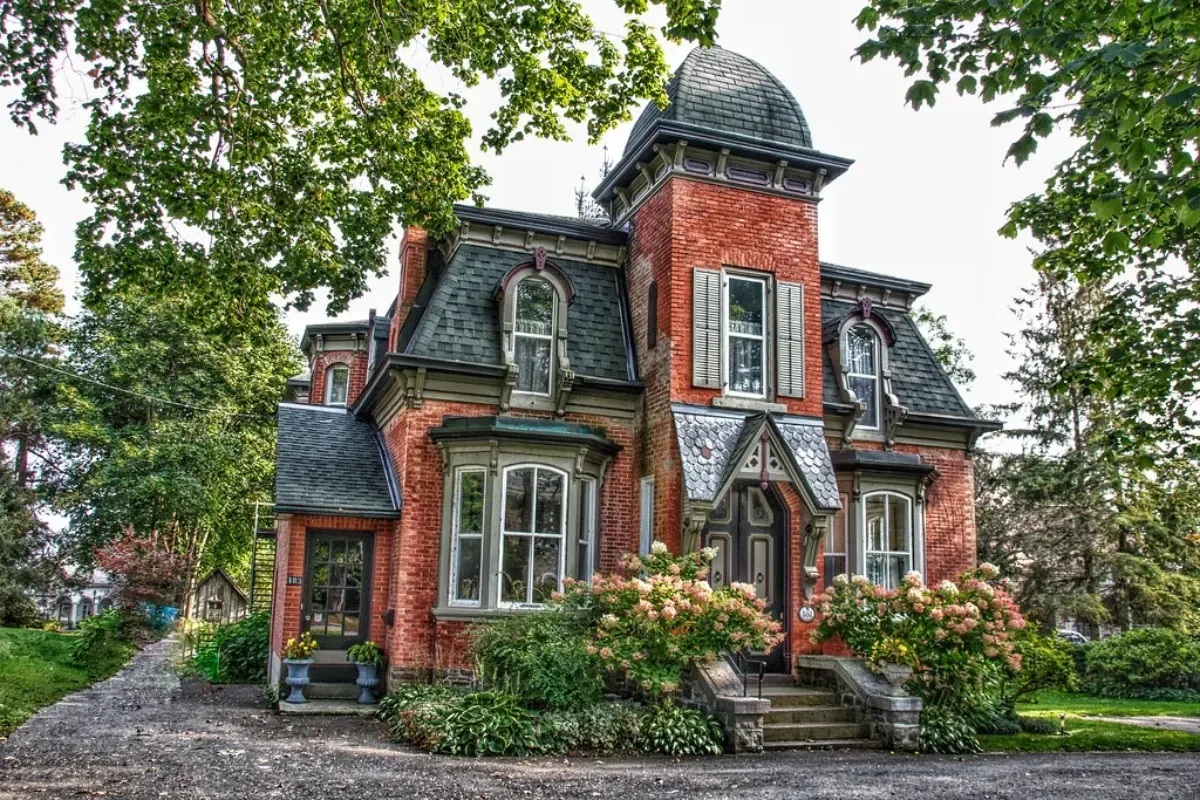
A mansard roof, also known as a French roof, features four sides with two distinct slopes on each. The lower slope drops steeply, sometimes almost vertically, whilst the upper slope sits at a much gentler angle on top. This creates the boxy silhouette you'll recognise on countless period homes across the Northern Quarter and Ancoats.
Named after François Mansart, the 17th-century French architect who popularised the design, these roofs became a favourite during the Victorian era. In Manchester, they're particularly common on converted cotton mills and period properties in conservation areas, a nod to the city's architectural heritage from the Industrial Revolution.
The genius of the mansard design lies in space creation. Those steep lower sections, often fitted with dormer windows, transform what would be a cramped attic into usable living space without pushing the building's height beyond planning restrictions. The upper section sits so shallow that it's virtually invisible from ground level, and it's precisely this hidden top portion that becomes your solar panel installation zone.

Key Features That Make a Roof "Mansard"
Not every dual-pitch roof counts as a mansard. Several specific features define this architectural style, and recognising them helps you work out what you're dealing with on your Manchester property.
Four-sided dual slopes form the foundation. Unlike a standard gable roof with one slope per side, every side of a mansard roof includes both a steep lower section and a shallow upper section. This all-round design distinguishes it from other roof types.
Nearly vertical lower sections create the dramatic profile. These steep faces, often incorporating dormer windows, maximise the usable attic space and create that distinctive French aesthetic you'll see throughout South Manchester and established neighbourhoods.
The shallow upper pitch crowns the structure with minimal angle, sometimes nearly flat. From street level, this top section often disappears from view entirely. It serves as the primary weather roof and can range from a small flat deck to a low-angled hip.
Dormer windows typically punctuate the steep lower faces, flooding the attic space with natural light. These windows come in various styles, gabled, arched, or flat-topped, and they're a visual hallmark of mansard architecture across Manchester's Victorian housing stock.
Material diversity is standard. Historic mansard roofs often used slate tiles, but modern versions might feature clay tiles, synthetic materials, or metal panels. The covering varies, but that characteristic dual-slope shape remains constant.
If your property in Wythenshawe or Salford Quays has four sides, each with a steep lower slope and gentle upper slope, you've got a mansard roof.
How a Mansard Roof Affects Solar Panel Design and Placement
Here's what matters: if you're thinking about solar panels for your mansard-roofed Manchester home, the unique architecture directly shapes where panels can go and how they'll perform. Those dramatic steep sides and hidden flat top create specific constraints and possibilities.
The steep lower slopes won't work for solar panel installation. Fixing panels to those near-vertical faces is a non-starter. Solar panels generate peak energy when sunlight hits them at roughly 90 degrees. A vertical panel only catches optimal sun when it's sitting low on the horizon, which happens briefly in winter mornings and evenings, and hardly at all during summer. Studies show vertical installations can underperform by 60-80% compared to properly angled systems.
Your workable space is the upper, low-angle section. The top of a mansard roof functions like a flat roof and offers far better solar potential. However, if it's completely flat, mounting panels flush means they'll lie horizontal, which isn't brilliant. Flat-mounted panels can lose 10-20% output compared to tilted installations and they collect more dirt and debris, requiring more regular maintenance.
Angled mounting delivers the best results. This typically involves racking systems that prop panels up toward the sun. Installers use triangular mounting frames to position panels at 30-40 degrees facing south. For Manchester's latitude, this angle captures maximum annual solar energy.
One advantage is that the flat top often sits within a parapet formed by those steep sides. This means panels can be completely hidden from street view, letting you generate clean energy without altering your property's historic appearance, particularly valuable in conservation areas across North Manchester and established neighbourhoods.
The size and orientation of the top section limits your options. On a compact Victorian terrace, the flat portion might be relatively small. Mansard tops typically form a four-sided hip, meaning only the south-facing portion will receive good sun throughout the day. Each Manchester property differs, so a professional solar installer needs to assess which parts of your roof get adequate exposure.
Best Solar Solutions for Mansard Roofs In Manchester
Despite the architectural challenges, several proven approaches can successfully bring solar energy to your mansard-roofed Manchester home.
Work with the upper low-slope section. The most practical approach involves placing solar panels on the upper, gentle slope or flat portion of the mansard roof. If your upper roof pitches at around 30-35 degrees facing southward, you might mount panels flush because this angle already sits near optimal for our latitude.
Tilt racking systems for flat sections. For roofs with a flat deck or nearly flat top, specialist mounting racks angle the panels up from the horizontal surface. These can be secured to the roof structure or weighted with ballast if drilling through the roof raises concerns. For Manchester's location, a tilt of roughly 30-35 degrees facing south captures excellent solar energy year-round.
High-efficiency panels maximise limited space. Because your available area might be smaller than on a standard pitched roof, consider high-efficiency solar panels that generate more power per square metre. Modern monocrystalline panels reach efficiencies of 20-22%, meaning even with fewer panels, you'll still produce meaningful electricity.
Structural capacity matters. Check your roof can handle the weight of solar panels plus mounting equipment. Panels themselves aren't particularly heavy (around 18-20kg each), but a full array plus racking should be assessed by your installer, especially for older Manchester properties.
Alternative solutions if the roof won't work. If the mansard roof's top is too small or heavily shaded by surrounding buildings, ground-mounted solar panels in your garden or a solar pergola can be positioned at the perfect angle without involving the roof structure at all.
Pairing with battery storage. Given that a mansard roof installation might be smaller than you'd achieve on a straightforward pitched roof, combining your system with battery storage makes real sense. Batteries let you store excess daytime generation and use it during evenings or overcast days, getting maximum value from your compact panel array.
With thoughtful planning, even a characterful old mansard-roofed house in East Manchester or West Manchester can host modern solar technology and join the solar swarm.
Final Thoughts on Mansard Roofs and Solar
Mansard roofs blend architectural elegance with practical space creation. They give Manchester homeowners distinctive character and extra living space, though they add complexity when you're looking to install solar panels.
If you own a mansard-roofed home and you're considering solar energy, remember that whilst the steep sides won't work for panels, the flat or gentle top section definitely can. You'll face some limitations, you might install a smaller system or need custom mounting solutions, but the financial and environmental benefits remain substantial.
Professional assessment is essential. Work with experienced solar installers who understand Manchester's period housing and can evaluate your specific roof geometry, sun exposure, and structural capacity. Even a modest solar array can cut energy bills significantly whilst preserving the mansard's historic character visible from the street, something particularly valuable in conservation areas across the City Centre.
With proper maintenance, a mansard roof can protect a home for decades, and with smart planning, it can also host solar technology to power that home well into the future. If you're ready to explore solar options for your mansard-roofed Manchester property, get in touch with our team. We'll assess your specific situation and design a system that works with your roof's unique characteristics, helping you power the house with clean energy.
Mansard Roofs Solar FAQs
Are mansard roofs good for solar panels?
Generally, mansard roofs aren't as straightforward as standard pitched roofs for solar panel installation. The dramatic dual-angle design means you'll only use the flat or gentle-sloped top surface. Those steep lower walls face almost vertically, limiting your system's generation capacity. That said, mansard roofs can definitely accommodate solar with proper planning and mounting solutions.
Can I install solar panels on the steep sides of a mansard roof?
It's not recommended. Solar professionals advise against placing panels on the vertical faces because the angle is so extreme that panels would capture minimal sunlight except briefly at dawn or dusk. The proper approach involves installing panels on the upper low-slope section, where they can be tilted appropriately toward the sun.
How should solar panels be mounted on a mansard roof for best results?
The most effective method is mounting panels on the top flat portion using angled racks to tilt them toward the sun. For Manchester's latitude, a tilt of roughly 30-35 degrees facing south typically delivers optimal performance. This might involve a ballasted racking system or a fixed tilted frame attached to the roof structure.
Is the upper slope of a mansard roof suitable for solar?
Yes, particularly if one side faces south. If a mansard's upper section pitches at around 30-35 degrees, it's nearly perfect for panel installation in Manchester. The crucial factor is that the upper slope must face the sun. North-facing upper slopes won't generate enough energy to justify the investment.
What if my mansard roof doesn't have much flat area on top?
If the flat top is very small or occupied by equipment, consider supplementary options. You could install a smaller array on the roof and add ground-mounted panels elsewhere on your property. A mansard home can still benefit from solar energy through these creative approaches, letting you join the solar swarm regardless of roof limitations.
Will adding solar panels damage my mansard roof or affect its appearance?
When installed correctly by qualified professionals, solar panel installation shouldn't damage your roof. Panels placed on the upper flat portion are often hidden behind the parapet-like edges, so they won't be visible from ground level. This means your home's appearance, especially that characteristic mansard profile and dormers, remains largely unchanged. For more information about our approach, visit our about page.
Are there any Manchester-specific considerations for mansard roof solar installations?
Manchester's Victorian and Edwardian housing stock means many mansard roofs sit in conservation areas. If your property is in a conservation area, you may need planning permission. Panels on the hidden upper section often satisfy planners because they're not visible from street level. Additionally, Manchester's industrial heritage buildings, including converted cotton mills with mansard features, may have specific structural considerations that require expert assessment. Check out our blog for more Manchester-specific solar guidance.
