
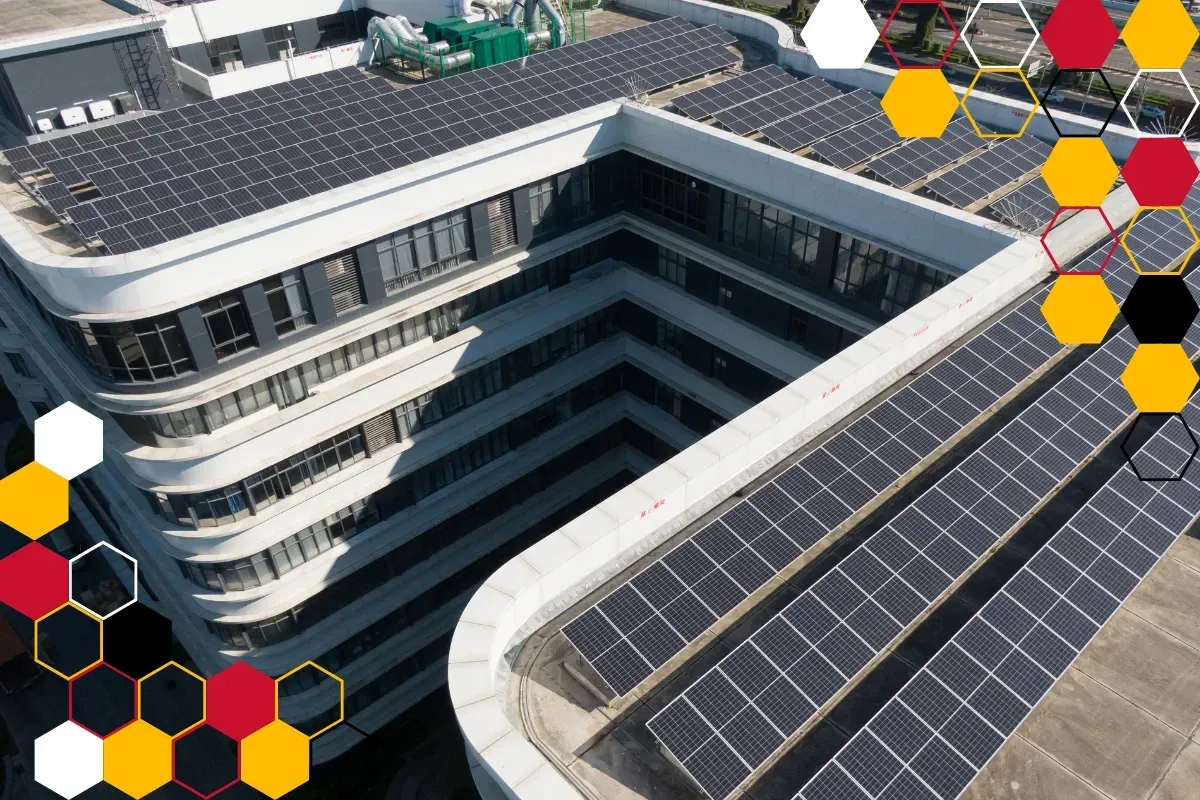
Can Offices in Manchester Save with Solar?
Energy costs are one of the heaviest overheads for any Manchester office, and there's little sign of them easing. Solar power isn't just a residential story anymore. It's a serious option for commercial buildings across the city, from small office units in Ancoats to larger complexes out in Trafford Park. So can offices in Manchester save with solar? The short answer is yes, but how much depends on your building, your energy demands, and how the project is put together.
Quick take: Solar reduces what your office buys from the grid, which is where the bulk of the saving comes from. A typical commercial installation costs roughly £650 to £1,200 per kWp. Payback on well-suited projects can land within three to five years. Manchester offices also have access to the UK's Smart Export Guarantee, which pays for surplus electricity sent back to the grid. Factor in capital allowances and the numbers get even more interesting. Here's the full picture.
Table of Contents
Why Manchester Offices Are Moving to Solar
How Solar Brings Office Costs Down
The Real Benefits for Office Buildings
What Does a Commercial Solar Installation Cost?
How Much Can Offices Actually Save?
Is Solar the Right Fit for Your Office?
Why Manchester Offices Are Moving to Solar
The economics have shifted. After the energy crisis pushed retail electricity prices sharply higher, businesses across Manchester started looking more seriously at generating their own power on site. Every kilowatt-hour your panels produce is one you're not buying from a supplier. For offices running through a full working week, that adds up.
There's also a broader push from policy. The UK government's strategic plan sets out a target to grow UK solar capacity from around 20 GW today to 56-62 GW by 2035, with commercial rooftops sitting at the centre of that expansion. Offices aren't a niche use case here. They're exactly where the rollout needs to happen. Manchester businesses that move now are getting ahead of something that's only going to grow.
Solar is no longer an experiment. It's proven commercial infrastructure, and offices across the city are treating it that way.
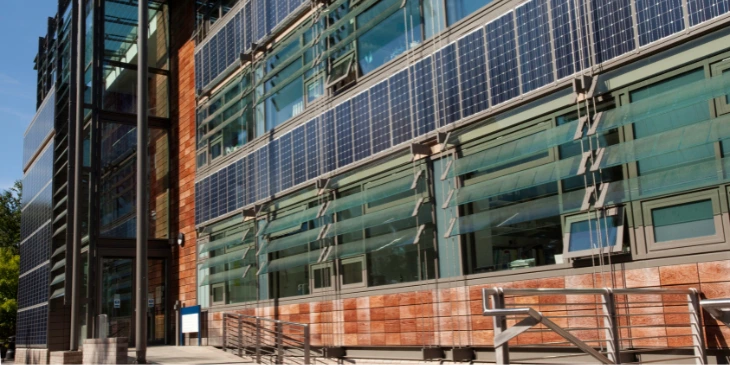
How Solar Brings Office Costs Down
There are three main ways a solar installation helps cut costs for a Manchester office.
Reduced electricity imports. This is the most direct saving. When your panels generate during the day, you're drawing less from the grid. Offices are typically busiest between 9am and 5pm, which happens to be when rooftop solar produces at its best. That alignment between generation and consumption is what makes offices such good candidates.
Export income through the Smart Export Guarantee. When your system generates more than the office can use, the surplus goes to the grid and you get paid for it. The Smart Export Guarantee (SEG) makes this possible for eligible generators across Great Britain. It's not a theoretical benefit. Ofgem's latest annual report shows 50 active tariffs from 11 SEG licensees, with 270,395 registered installations totalling 1,585 MW by March 2025. In the year covered by that report, £30.7 million was paid out to registered installations for exported power. That's a real income stream, not a rounding error.
A buffer against price swings. Energy prices have been anything but predictable. Once a solar system is installed, a portion of your electricity cost becomes fixed. That makes budgeting easier and reduces how exposed your office is to supplier pricing decisions. If you're also looking at battery storage alongside panels, you can push this further by holding onto surplus daytime generation for evening use or peak tariff periods.
The Real Benefits for Office Buildings
Lower bills are the headline. But they're not the whole story. Here's what offices in Manchester actually stand to gain.
Ongoing cost reduction. Month after month, year after year, a well-sized system cuts what you spend on electricity. The saving scales with your roof size, energy demand, and how much of what you generate you actually use on site.
Sustainability credentials that matter. A solar installation sends a clear message to clients, staff, and partners. Sustainability is increasingly a factor in commercial decisions, and an office with solar on the roof has a straightforward story to tell. It's not just about being green. It's about positioning.
Low maintenance, long life. Solar panels don't have moving parts. They need occasional cleaning and a check-up once or twice a year. Systems routinely last 25 years or more, with panel performance typically guaranteed for that period. Inverters are the main component that needs replacing, usually after 8 to 12 years. Our vetted team’s maintenance and repair service is there for Manchester offices that want ongoing support throughout the system's life.
Energy resilience. Add battery storage and your office gains a genuine backstop against grid outages. For businesses where downtime costs money, that resilience has a real financial value attached to it.
Future-proofing. The UK's direction of travel on commercial solar is clear. Offices that install now are ahead of a shift that's going to keep accelerating.
What Does a Commercial Solar Installation Cost?
The most reliable UK benchmark puts commercial rooftop solar at roughly £650 to £1,200 per kWp installed. Here's how that plays out across different system sizes:
These are indicative ranges. What your Manchester office actually pays will depend on roof size and condition, structural requirements, electrical upgrades, grid connection complexity, and whether you're adding battery storage.
Tax relief reduces the real cost. HMRC classifies solar panels as special rate expenditure for capital allowances purposes. Businesses may qualify for a 50% special rate first-year allowance on qualifying installations, with the remaining balance entering the special rate pool. The effective net cost to your business can be meaningfully lower than the headline quote suggests. Your accountant is the right person to advise on what applies to your specific situation.
Upfront capital isn't the only route. Some commercial customers use a Power Purchase Agreement (PPA), where the system goes in at no upfront cost in exchange for buying the electricity it generates at an agreed rate. It's not the right fit for every office, but if capital is tight, it's worth knowing the option exists.
If you want to get a clearer picture of what your specific building could support, our contact page is the right place to start.
How Much Can Offices Actually Save?
Savings vary by site, but real-world evidence from the UK gives a useful reference point. One case study examined a commercial site and identified around £5,000 a year in potential energy savings, with a project cost of £61,500 and carbon savings of 17.6 tonnes per year. A separate case study from the same source found that a 10 kW PV array reduced grid reliance by almost 80% at a commercial daytime operation. These aren't averages, but they show what's achievable when the building profile suits the technology.
On payback, commercial solar can return the investment within three to five years on well-matched projects. That's a market-side reference, not a guarantee. The actual timeline for your Manchester office depends on tariff rates, self-consumption levels, export income, system size, and financing. But for offices with strong daytime energy use and a roof that works, the financial case can be solid.
The three pillars of value are:
Avoided grid electricity: the largest saving for most offices
SEG export income: paid for surplus power sent back to the grid
Capital allowances: tax relief that reduces the effective investment cost
Is Solar the Right Fit for Your Office?
Not every office is an equally strong candidate, but many buildings across Manchester are. Here's what to look at.
Roof suitability. South, south-east, or south-west facing roofs with minimal shading during core hours give you the best output. Flat roofs can work well with angled mounting systems, and plenty of Manchester's commercial stock has exactly that. The roof needs to be in reasonable structural condition and capable of supporting the panel load.
Daytime energy use. Offices running computers, lighting, HVAC, and server rooms through a standard working week are well placed to use a large share of what their panels generate. The higher your self-consumption during generation hours, the stronger your savings.
Building control and tenure. Owner-occupied buildings are the simplest starting point. Tenants need landlord consent. If the building is listed or in a conservation area, additional planning checks apply before you can proceed.
Manchester's weather. This one surprises people. Solar panels generate from daylight, not just bright sunshine, so they produce power on overcast days too. Output is lower in winter than in summer, but the system earns across the whole year. Manchester's climate isn't the barrier some assume it to be.
Battery storage. You don't need a battery to make solar worthwhile. A well-designed system delivers solid savings through self-consumption and export alone. But if your office has meaningful evening or weekend loads, or you want a degree of grid independence, storage is worth modelling into the business case.
Manchester offices across the city are making this work. Whether yours is in the city centre, north Manchester, south Manchester, east Manchester, or west Manchester, the fundamentals are the same: the right roof, the right energy profile, and a project put together properly.
Closing Thoughts on Solar for Manchester Offices
Solar has become genuine commercial infrastructure for UK offices. The financial case rests on three real mechanisms: reduced electricity imports, export income through the SEG, and tax relief on qualifying capital expenditure. Not projections. Not optimism. Proven, trackable returns.
That said, solar is site-specific. Two Manchester offices of similar size can produce very different outcomes depending on roof geometry, shading, energy demand patterns, lease arrangements, and grid-connection requirements. The honest position is this: solar often makes strong financial sense for offices when the building suits it and the project is structured correctly.
If you want to understand what solar could realistically mean for your office's energy costs, get in touch and we'll help you work through it properly. You can also explore the rest of our blog for more guidance on solar across Manchester.
Solar Energy for Offices FAQs
Do solar panels work for offices in Manchester's climate?
Yes. Solar panels generate electricity from daylight, not constant direct sunshine. They produce power on overcast days, which means Manchester's weather isn't a barrier. Output varies across the seasons, but the system earns throughout the year.
Does an office need battery storage to benefit from solar?
No. A solar PV system works without battery storage and can still deliver real savings through self-consumption and SEG export income. Battery storage is an optional addition that can strengthen the case for offices with evening or weekend loads, or for those that want added resilience against grid outages.
Can a Manchester office get paid for surplus electricity?
Yes. If your office is in Great Britain and your system meets the eligibility criteria, the Smart Export Guarantee gives you a route to be paid for electricity you send back to the grid. There are currently multiple active tariffs from SEG licensees, so it's worth comparing rates when your system is commissioned.
Does commercial solar always need planning permission?
Not always, but you should never assume it doesn't. Building regulations approval and planning permission are separate requirements and you may need both. Offices in listed buildings or conservation areas face additional checks. Always confirm with your installer and local planning authority before proceeding.
How much upkeep does an office solar system need?
Very little. Panels need occasional cleaning and a check-up once or twice a year. The system has no moving parts, which keeps ongoing costs low. Inverters typically need replacement after 8 to 12 years, and panel performance is usually guaranteed for 25 years or more. Our vetted team’s solar maintenance service is available for Manchester offices that want ongoing support.
Where in Manchester can offices get solar installed?
Across the city. Whether you're based in the city centre, in established commercial areas to the north, south, east, or west, or in an out-of-town office park, the assessment process is the same. Get in touch, and our vetted team will take a look at what your building can support.
