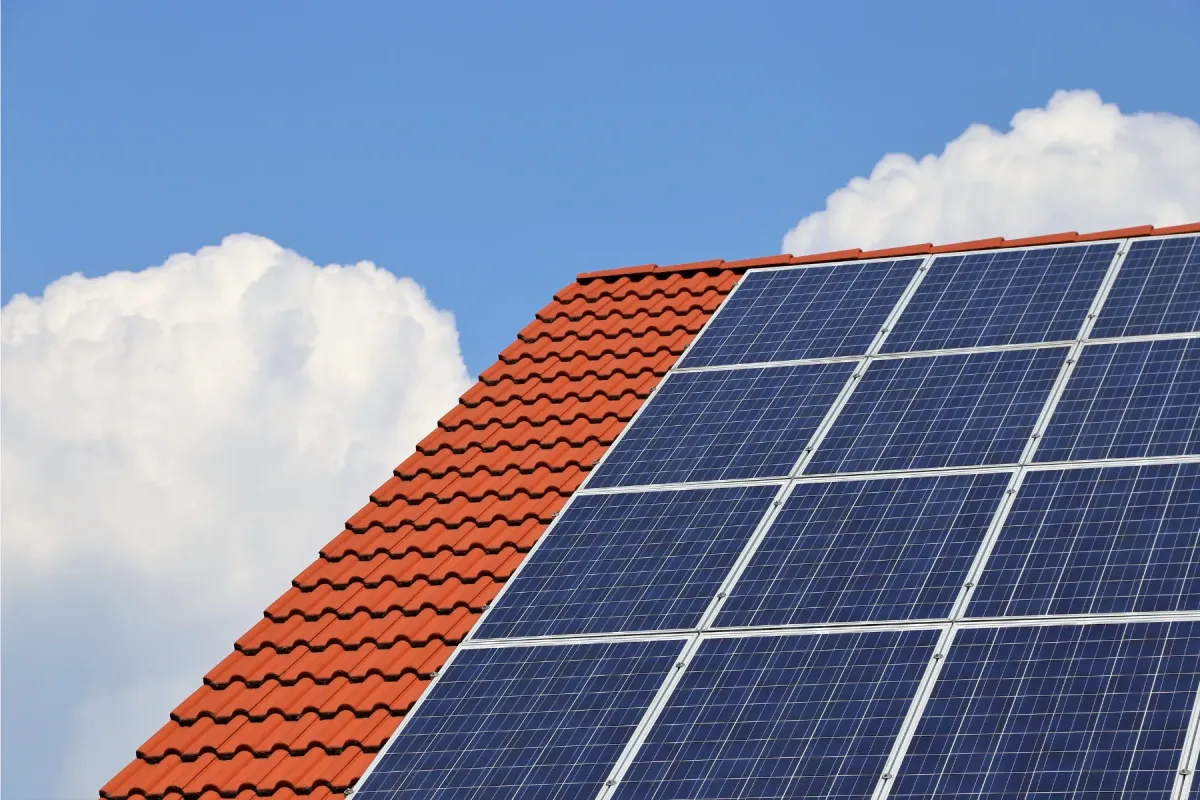
Will Solar Panels Fit on My Manchester Roof? - 2026
Thinking about joining the solar swarm but wondering if there's actually room on your roof? Whether you're in a Victorian terrace in Chorlton, an Edwardian semi in Didsbury, or a converted mill flat in Ancoats, it's a fair question. Manchester's housing stock is varied, and not every roof tells the same story.
Quick take: Most Manchester homes can fit 10-20 solar panels, needing around 20-30m² of usable roof space. Standard panels measure roughly 1.7m x 1m and weigh about 20kg each. Whether panels will fit depends on your roof's size, which way it faces, its condition, and what's in the way. For the majority of Manchester properties, getting enough panels up to power the house is absolutely doable.
Table of Contents
How to Measure Roof Space for Solar
How Many Panels Can Fit on a Typical UK Roof?
How Many Solar Panels Do You Actually Need?
Typical UK Panel Sizes
When we talk about solar panel size, we're looking at two things: the physical dimensions and how much power they generate. Across Manchester and the UK, most residential panels produce between 250W and 400W. They're typically 1.7-2 metres long, about 1 metre wide, and stick out 3-4cm from your roof. Each panel takes up roughly 1.6-2.3 square metres of space.
Weight's another consideration. Your average panel weighs 18-25kg. Higher-output panels that push 500W+ can be slightly larger, but not dramatically so.
The standard UK solar panel size works out to about 1.95m x 1.13m, giving you 2.2m² total. These panels pack 60-72 silicon cells under tempered glass. What's changed over the years isn't so much the size, but the efficiency. Today's panels generate significantly more electricity from the same footprint compared to what was available even five years ago.
What Limits Your Roof?
It's not just about total square footage. Several factors determine how many solar panels will actually fit on your Manchester roof.
Available Roof Area: This is the obvious one. Dormer windows, chimneys, skylights, or multiple roof sections all eat into usable space. Installers need to leave at least 20cm margins around roof edges for safety and maintenance, so you can't fill every last inch. Soil pipes, vents, or satellite dishes also reduce the area where panels can fit. If you're in a period property around Northern Quarter or Castlefield with ornate rooflines, the layout gets even more complex.
Roof Orientation: Direction matters for output. South-facing roofs with a 30-40° pitch are ideal for Manchester's latitude. East or west-facing roofs can definitely fit panels, but they'll generate less energy throughout the year. You might need to install additional panels to hit your energy targets.
Shading: Shadows kill production. Trees, neighbouring buildings, or chimneys that cast shade make those roof sections unsuitable for panels. Sometimes a roof in North Manchester or South Manchester has plenty of physical space but loses chunks of it to shade from taller buildings nearby.
Structural Capacity: Can your roof handle the load? For most modern houses, yes. Panels add roughly 10-12kg per square metre to your roof. UK roofs are designed to carry much more, with typical capacity around 108 kg/m². Older Victorian or Edwardian homes with original slate roofs might need a structural survey before installation.
Roof Condition: Don't install new panels on a failing roof. Solar panels last 25+ years, so your roof needs to be in good shape for the long haul. If you're looking at replacing tiles in the next few years, sort that out before going solar. Installers generally recommend your roof has at least 10-15 years of serviceable life left.
UK regulations play a part too. Domestic solar usually falls under permitted development, provided panels don't stick out more than 20cm from the roof surface. Your roof's size, shape, orientation, shading, and structural soundness all combine to determine how many panels will realistically fit.

How to Measure Roof Space for Solar
Working out how many panels fit starts with measuring the usable roof area that gets decent sunlight. That means south-facing sections primarily, though east and west-facing areas work too, minus any heavily shaded spots.
For a rectangular section of roof, measure the length and width, then multiply them together. Do this for each roof plane you plan to use and add them up. You'll typically skip north-facing sections in Manchester as they don't get enough direct sun. Subtract space around obstructions like chimneys or vents, and leave buffer zones near edges. What's left is your net usable area for solar panels.
Once you've got that number, estimate panel count by dividing your usable area by a single panel's footprint. A typical panel is about 1.7m by 1m, so for quick calculations, use roughly 2m² per panel. If you've got 50m² of good roof space, you're looking at around 25 panels fitting comfortably.
Digital tools can speed this up. Online solar calculators use satellite imagery to estimate your roof's area and automatically factor in orientation and potential shading issues.
Say you have a 40m² south-facing roof. Dividing that appropriately suggests roughly 23 panels could fit. Final layouts need confirming with a professional survey from Solar Panels Manchester, but this gives you a starting point for planning.
How Many Panels Can Fit on a Typical UK Roof?
There's what can physically fit on your roof, and there's what you should actually install. Let's look at physical capacity first for typical Manchester properties.
UK homes generally have smaller roofs than you'd find in, say, Australia or the US. Your average three-bedroom house roof can hold 10-20 panels maximum, assuming you're using both slopes of a pitched roof.
Installers must leave at least 20cm gaps around roof edges, plus about 15cm between panel rows for airflow and maintenance access. These spacing requirements reduce the total number that fit. You might get 12-16 panels on one roof face of a decent-sized detached house in West Manchester or East Manchester, whilst smaller terraces around the City Centre might only accommodate 6-8 panels.
A typical 4kW residential system needs about 12-16 panels, requiring roughly 20-30m² of roof space. Most Manchester semi-detached or terraced homes have 20-30m² of south-facing roof available, which works well for standard installations.
For typical Manchester properties, expect 6-14 panels in most installations, with 10-12 panels (around 4kW) being very common for three-bedroom semi-detached homes.
How Many Solar Panels Do You Actually Need?
Here's the practical question: how many solar panels do you actually need to power the house? This comes down to your household's energy consumption.
The average UK household uses roughly 2,900 kWh of electricity per year. For typical usage patterns, about 8-12 panels are enough for most Manchester homes. A standard three-bedroom house might install around 4kW of solar (10-12 panels), which produces roughly 3,000+ kWh annually in Manchester's climate.
For a one-bedroom flat in the Northern Quarter, 4-6 panels could cover most needs, whilst a large five-bedroom family home in Didsbury with higher consumption might need 14-20 panels to make a meaningful dent in bills.
Check your annual electricity usage in kWh on recent utility bills to work out what you need. Calculate the system size by dividing your annual consumption by typical production per kW of solar in Manchester. If you're using 4,000 kWh per year and 1kW of solar yields about 850 kWh annually in our climate, you'd need approximately 4.7kW of panels.
Standard calculations make this easier. In the UK, each watt of solar capacity produces around 0.85-1.0 kWh yearly. A 400W panel in Manchester might generate about 400-450 kWh per year, accounting for our cloudier weather.
You don't necessarily need to cover 100% of your consumption with solar. Most Manchester homeowners size their systems to handle a substantial portion of usage without massively overshooting it. Unless you've got solar battery storage or expect higher future consumption, installing excess panels may not give you the returns you're after.
The sweet spot is meeting your needs without creating huge surplus. Quick rule of thumb: each 1kW of solar (roughly 2-3 panels) generates about 800-1,000 kWh yearly in Manchester. Balance that against available roof space and budget. If your roof can't physically fit the theoretical number, you'll need to scale down expectations or consider higher-wattage panels.
Solar's modular nature is helpful here. You can start with panels covering part of your needs and add more later, provided your inverter and grid connection can handle expansion.
Final Thoughts on Sizes and Solar Panels
Sizing a solar system means balancing your roof's physical limits against your energy requirements and budget. Panels come in fairly standard sizes these days, but they've become considerably more powerful over time.
If you've got a smaller roof in a terrace around Chorlton or Levenshulme, opt for high-efficiency panels that produce more watts per square metre. If you're blessed with a large roof on a detached property, you probably won't need all that space. Size your system to your actual need, not just available area.
Solar's a long-term investment. Think about future needs like electric vehicles or heat pumps. Make sure your roof's in decent condition before installing panels that'll sit there for 25+ years.
Get professional assessments. Qualified solar surveyors will measure your roof properly, check orientation and shading, and propose optimal panel layouts. Solar systems are excellent for cutting bills and reducing your carbon footprint.
Understanding typical panel sizes, what limits your roof, and how to calculate your actual needs puts you in a stronger position when talking to installers. Make the most of available sun, work within your roof's constraints, and size systems smartly for your household.
Ready to find out whether solar panels will fit your Manchester roof? Get in touch for a free site survey. For ongoing support, our solar maintenance services keep your system performing at its best for years to come.
FAQs on Solar Panels and Roofs
How big is a standard solar panel?
A typical residential panel is roughly 1.6-1.8 metres tall and about 1 metre wide, covering around 1.7-2.3m² in total. These panels weigh between 18-25 kilograms each. Higher-wattage panels (400W+) tend toward the larger end of that range. Modern panels are typically around 2m² with 400W capacity.
How much roof space is needed for a typical solar system?
You'll need about 5m² per 1kW of solar. A standard 4kW domestic system (around 12-16 panels) requires roughly 20m² of clear roof space. Higher-wattage panels need fewer individual panels and slightly less total area.
Can my roof support the weight of solar panels?
Most likely, yes, if it's structurally sound. Panels add about 10-12kg per square metre. Manchester roofs generally handle solar arrays without issue, with typical load capacity around 108 kg/m². If your roof's old or showing signs of damage, have it inspected before installation.
Do I need planning permission to install solar panels?
In most cases, no. UK residential solar panels generally fall under "Permitted Development" rules. The main requirement is that panels shouldn't protrude more than 200mm from the roof surface. For most Manchester homeowners, installing standard arrays on typical pitched roofs doesn't need planning permission.
What if my roof can't fit all the solar panels I want?
Use higher-wattage panels (450W or 500W instead of 300W) so each panel generates more power. Utilise multiple roof sections if you've got them, like both front and back slopes. Consider alternative mounting locations like garages or even ground-mounted systems if you've got garden space.
Is there a maximum number of solar panels I'm allowed?
There's no hard legal limit on panel numbers for domestic installations. Systems above certain capacities may need additional approvals from your Distribution Network Operator. Any system larger than 3.68kW per phase requires informing the DNO and getting their sign-off.
Will solar panels damage my roof or cause leaks?
Properly installed systems shouldn't damage your roof. Panels mount using brackets attached to roof rafters, with all penetrations sealed using proper flashing. Professional installers ensure all attachment points are watertight and won't compromise your roof's integrity.
