Can Solar Panels Work for My Manchester Restaurant?
Running a restaurant in Manchester means watching every penny. Your energy bills? They're probably one of your biggest headaches. With industrial ovens blazing, fridges running 24/7, and extraction systems working overtime, electricity costs can drain your margins faster than a busy Saturday night fills your tables. You've likely heard solar panels can help, but will they actually make a difference for your place?
Quick take: Solar panels can dramatically reduce energy costs for Manchester restaurants. The typical restaurant uses four times more energy per square foot than standard commercial properties, which makes solar a particularly smart investment. A 50 kW installation could save you upwards of £7,000 each year, and with zero VAT on installations plus business rates exemption running until 2035, the financial case is stronger than ever. Whether you're running a café in Chorlton or a gastropub in the Northern Quarter, matching your system to your kitchen's energy demands and roof capacity is what makes it work.
Table of Contents
Why Manchester Restaurants Are Making the Switch to Solar
What Manchester Restaurants Actually Save With Solar
Getting the Size Right: From Your Kitchen's Appetite to Your Roof's Capacity
Where to Install Solar Panels at Your Manchester Restaurant
Grants, and Tax Breaks for Manchester Restaurant Solar
Why Manchester Restaurants Are Making the Switch to Solar
Your energy bills have been painful lately. Every restaurant owner in Manchester knows it. Solar panels offer something precious in this business: control. Once installed, you're producing electricity at a locked-in cost. No more wondering what your supplier's going to charge next month or bracing yourself for another price jump.
The green credentials matter too. McDonald's didn't commit to renewable energy powering around 8,000 of their restaurants on a whim. Customers care about this stuff. When you can honestly tell people your fish and chips or flat white is partly solar-powered, it connects with the growing number of people who think about where their money goes.
But let's be real: the main reason is money. Panel prices have tumbled over the past few years, even as your electricity bills have shot up. Throw in the UK's generous tax incentives, and you've got numbers that actually work. Add battery storage to the mix, and you're also protecting yourself when the grid goes down, keeping fridges cold and service running during outages.

What Manchester Restaurants Actually Save With Solar
Right, let's get into actual figures. Across the UK, each kW of solar capacity produces somewhere between 850-1,200 kWh annually, depending on where you are and how your roof faces. Manchester sits comfortably within that bracket. A 30 kW system would churn out roughly 25-35 MWh per year.
At 25p per kWh (and that's being conservative for commercial tariffs), those 30 MWh translate to annual savings of £6,250-£8,750. Not a bad return on kit that'll keep working for 25 years or more with barely any hassle.
The numbers hold up in practice. When Leunig's Bistro installed a 26.4 kW rooftop setup, they generated about 28,000 kWh yearly, covering around 53% of what they used. Over in the States, a Culver's restaurant saw their 60 kW solar canopy pump out 90 MWh in the first year, cutting costs by nearly $11,000.
Here's the thing though: your dinner rush happens when the sun's gone down. Solar generates peak power between 11am and 3pm, whilst most restaurants really hit their stride from 6pm onwards. You'll use that solar energy for morning prep, keeping fridges running, and serving lunch, but you're still pulling from the grid when evening service kicks off.
Battery storage helps with this mismatch. Store the excess power generated at lunch, then use it during your evening peak. The catch? Batteries cost an extra £5,000-£15,000 upfront. Whether that stacks up depends on your specific tariff and how you use energy throughout the day. Even without batteries, offsetting 40-60% of your yearly electricity consumption makes a real difference. For a Manchester restaurant burning through 100 MWh annually, that's £10,000-£15,000 staying in your business instead of going to your supplier.
Getting the Size Right: From Your Kitchen's Appetite to Your Roof's Capacity
Size matters here. Start by working out what you actually use. Dig out a year's worth of electricity bills and calculate your average consumption. A typical full-service restaurant pulls 20-30 kW at peak times, mostly from commercial ovens, walk-in fridges, and climate control.
Once you know your usage, think about your roof. In Manchester, you'll need about 10 square metres of unshaded roof for every kW of solar you want to install. Modern panels produce around 400W each and take up roughly 2 square metres, so a 30 kW system needs 75 panels covering about 150 square metres.
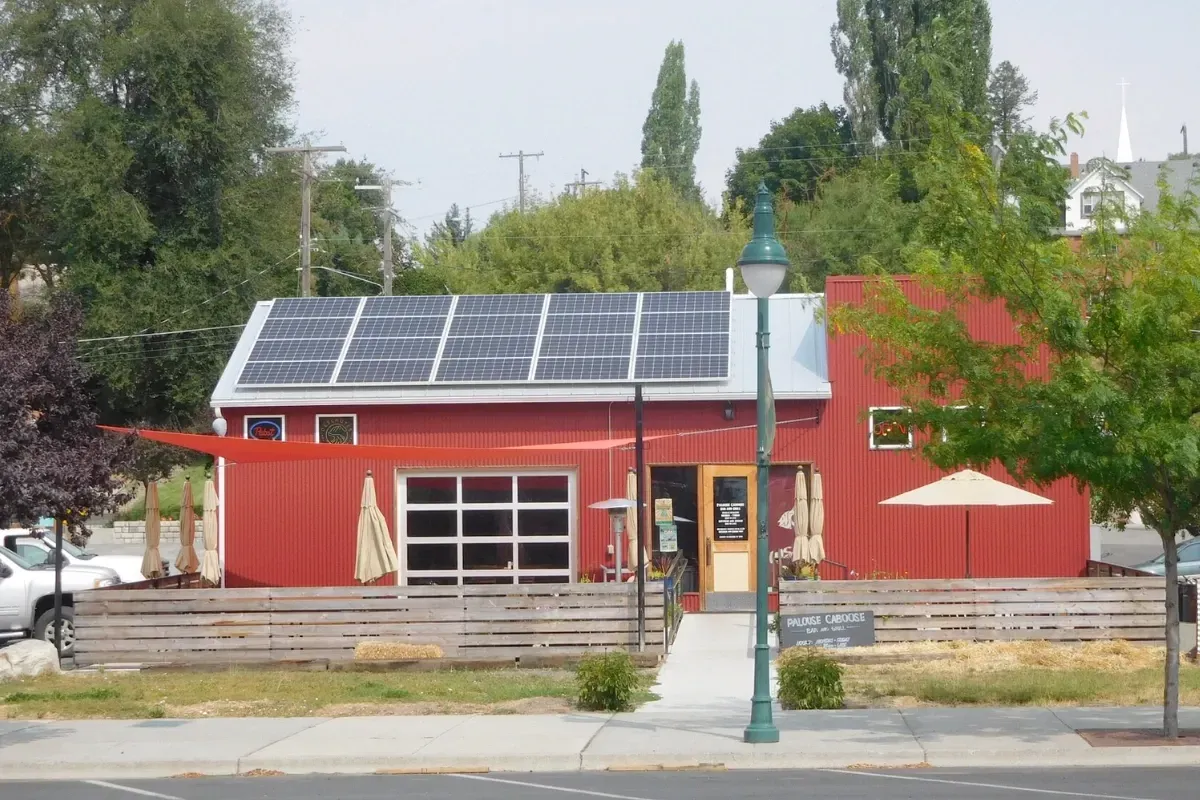
Flat roofs work brilliantly for restaurants. Most commercial buildings across Manchester have them, and they're perfect for ballasted solar setups that don't puncture your roof membrane. The panels sit on weighted frames, angled south at around 30 degrees for best results.
Shade kills performance. Even a bit of shadow from nearby buildings can hammer your output. A proper site survey spots these problems. If you can't avoid shade completely, solar maintenance specialists can work around it using optimisers or microinverters that limit the damage.
Don't skip the structural assessment either. Solar arrays aren't massively heavy (roughly 15-20 kg per square metre), but your roof needs to handle the load safely. Most restaurant roofs cope fine, though older buildings in areas like Ancoats or the Northern Quarter might need some reinforcement.
Where to Install Solar Panels at Your Manchester Restaurant
You've got three realistic options for mounting your panels, each with different costs and benefits.
Rooftop setups are what most people go for. Makes sense when you're already paying for that roof, so why not put it to work? Installation costs less because you don't need to build separate structures. The limitation is space. Properties in Salford Quays or the city centre often struggle with this, particularly older buildings with awkward layouts or neighbouring structures casting shadows.
Solar carports can be brilliant if you've got customer parking. Panels mount on frameworks over parking bays, generating power whilst giving customers covered spots. People appreciate the shelter, whether it's keeping the rain off in winter or providing shade in summer. The downside is price: carport structures typically cost 30-50% more than straightforward rooftop installations. If you're running a place in Didsbury or Chorlton with decent parking space, the extra capacity might justify the cost.
Ground-mounted systems suit restaurants with land to spare, maybe those in suburban spots like South Manchester with room around the property. These installations can scale bigger than rooftop options, and maintenance is easier when everything's at ground level. The problems? You're using land that could otherwise serve customers, and you'll almost certainly need planning permission.
Plenty of restaurants mix approaches. Panels on the roof for your baseline capacity, maybe a small carport for staff parking, and if you've got the space, a ground array round the back. Your choice depends on your specific Manchester site and what you're trying to achieve.
Grants, and Tax Breaks for Manchester Restaurant Solar
This is where the UK government's actually being helpful for once. Several incentives stack together to make solar more affordable.
Zero VAT is massive. Between April 2022 and March 2027, qualifying solar installations carry 0% VAT instead of the usual 20%. That's an instant saving of one-fifth off your total cost. A £40,000 system costs you exactly £40,000, not £48,000. Batteries installed at the same time also get the zero rate. This isn't small change. On a typical 50 kW restaurant system running £50,000-£60,000, you're saving £10,000-£12,000 straight off the bat.
Business rates exemption matters just as much. Solar and battery storage kit is specifically exempt from business rates calculations until 2035. You get all the benefits without any ongoing tax burden eating into your savings.
There's also a government scheme offering free energy assessments to 600+ hospitality businesses. The programme targets collective savings of about £3 million across participating venues.
Stack everything together and the numbers get compelling fast. A £50,000 solar installation might actually cost you £40,000 after VAT relief, save you £9,500 in corporation tax, and generate £7,000+ yearly in electricity savings. You're looking at payback in 4-6 years, then 20+ years of essentially free electricity after that.
Final Thoughts on Solar for Manchester Restaurants
Solar makes solid business sense for Manchester restaurants. The sheer energy intensity of commercial kitchens, combined with today's electricity prices and strong UK incentives, creates conditions where solar pays back faster than in most other sectors.
Every restaurant's different though. A café in Chorlton with limited roof space and heavy evening trade will see different returns than a Northern Quarter gastropub with a big south-facing roof and strong lunch business. The fundamentals work in solar's favour, but your specific site and usage patterns determine your actual returns.
The best installations pair solar with wider energy efficiency improvements. If you're still running ancient kitchen kit or inefficient lighting, sort those first. Solar delivers better value when you're not wasting the electricity it generates.
Don't rush this. Get multiple quotes, demand detailed shading analysis, and confirm all incentive eligibility before committing to anything. Make sure your chosen installer is MCS-certified (you need this for VAT relief) and that they understand commercial installations properly.
The wider energy picture favours solar. Electricity prices stay high, and policy keeps pushing towards renewables. Business rates exemption runs until 2035, but these incentives won't necessarily last forever. The case for solar is strong now; waiting might mean weaker incentives later.
If you're running a restaurant anywhere across Manchester, from the city centre to North Manchester, from South Manchester to East and West Manchester, solar deserves serious consideration. Check out our solar battery storage options to get the most from your system, or get in touch to discuss your specific situation.
Solar for Manchester Restaurants FAQs
Will solar actually work for my restaurant?
If you've got strong daytime electricity use and decent roof space, solar should save you money over the long run. Restaurants using over 100 MWh yearly can offset a significant portion through solar panels. Book a site assessment to properly size a system and work out ROI using your actual tariffs.
How do I work out what size system I need?
System size depends on how much you consume annually and what your site can handle. Divide your yearly kWh by UK solar yield (850-1,200 kWh per kW installed) to estimate the capacity you need. Then check how many 400W panels actually fit on your roof. Most Manchester restaurants end up somewhere between 20-60 kW.
Do I earn money from excess solar power?
The old subsidised export tariffs are gone. Surplus electricity earns a modest market rate (usually a few pence per kWh), so using as much as you can yourself makes the most financial sense. Any export payments are a bonus on top of what you're already saving.
Should I add batteries to the system?
Batteries store excess midday solar for use during evening peaks. This increases self-consumption and can help cut demand charges. The trade-off is cost: batteries add £5,000-£15,000 typically. Only size batteries if your usage pattern and tariff structure make them pay for themselves.
Could solar damage my roof?
Properly installed solar is non-invasive. Panels on flat roofs usually use ballasted mounting (weighted frames with no roof penetration). A competent installer makes sure your roof warranty stays valid. The panels can actually protect your roof membrane from UV damage.
What maintenance do solar panels need?
Solar panels have no moving parts, so maintenance is minimal. Plan to clean them occasionally and keep an eye on system performance. Most panels carry 25-year performance warranties. Inverters typically last 10-15 years before needing replacement (£1,000-£3,000). Our maintenance and repair service keeps Manchester systems running smoothly.
How quickly will the system pay for itself?
With current incentives, most Manchester restaurants see payback in 4-7 years. This assumes 0% VAT, capital allowances, and typical commercial electricity rates. After payback, you're producing nearly free electricity for another 18-20 years.
Do I need planning permission?
Most rooftop solar on commercial buildings counts as permitted development and doesn't need planning permission. However, if your restaurant's in a conservation area, your building's listed, or you're installing ground-mount or carport systems, you'll likely need approval from Manchester City Council.
