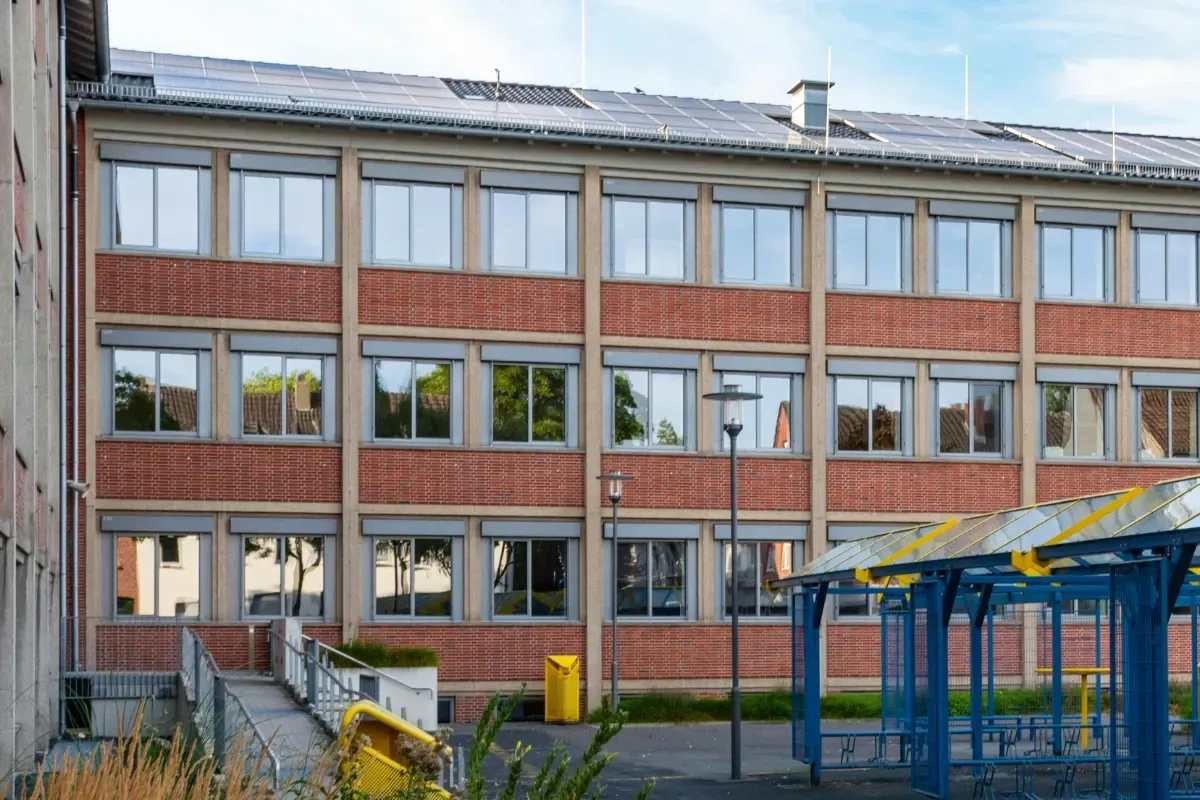
Can Schools in Manchester have Solar Panels? - 2026
Imagine a Manchester primary school cutting upto ~£25,000 off its annual energy bill while transforming the roof into a hands-on classroom for renewable energy. It's happening right now across Greater Manchester, and with new government funding landing in 2025, your school could be next.
Quick Take: Manchester schools can absolutely install solar panels. Government programmes like Great British Energy are funding complete installations at no upfront cost, helping schools slash energy expenses, shrink their carbon footprint, and give students real-world STEM experiences from Chorlton to Salford Quays.
Table of Contents
Why Schools Are Turning to Solar Panels
How Solar Panels Work on School Buildings
Key Benefits of Solar for Schools
Costs, Funding, and Grants for School Solar Projects
Planning and Installing Solar on a School
Maintaining and Monitoring a School Solar System in Manchester
Why Schools Are Turning to Solar Panels
School budgets are being squeezed from every direction. Rising energy costs mean less money for teaching resources, fewer teaching assistants, and outdated equipment limping along for another year. Every pound spent keeping radiators warm or computers running is a pound that can't go toward the students who need it most.
Solar panels offer a way out of this cycle. When your school generates its own electricity, you're no longer at the mercy of energy price hikes. Schools installing solar can cover up to 75% of their electricity needs straight from the roof. During weekends and half-term breaks, when the building sits empty but panels keep working, that excess power feeds back into the grid and brings in extra income. It's not just theory. Schools across England are already banking these savings and reinvesting them where they matter.
Manchester's Victorian terraces and Edwardian semis tell the story of a city built during the Industrial Revolution, but many school buildings from that era are crying out for modern upgrades. Rather than just patching leaky roofs or replacing ancient boilers, solar installation gives schools a chance to modernize infrastructure while simultaneously tackling energy costs. You're fixing two problems with one smart solution.
Then there's the environmental side, which matters more than ever. Switching from grid electricity to clean solar power cuts harmful emissions that affect air quality across our communities. Cleaner air means healthier students and staff. When you add up the impact across schools in places like Didsbury, Ancoats, and the Northern Quarter, Manchester takes genuine steps toward its net-zero commitments.
Perhaps the most exciting benefit is what happens inside the classroom. A working solar panel system becomes a teaching tool that brings science lessons to life. Students can watch real-time power generation on classroom displays, tracking exactly how much electricity the school produced this morning. Teachers use this live data to teach physics concepts, environmental studies, and even maths through calculating carbon savings. Abstract ideas about renewable energy become concrete when you can literally point at the roof and say, "That's where our electricity comes from."

How Solar Panels Work on School Buildings
Solar panels are built around semiconductor cells, typically silicon, that turn sunlight into electricity. When sunlight strikes these cells, it creates a flow of direct current (DC) power. The technology behind this process has been refined for decades and it's remarkably reliable.
Schools don't just stick one panel on the roof and call it a day. Multiple panels get connected together into a complete array, usually mounted on angled frames that face the sun for maximum exposure throughout the day. All that DC electricity then travels to an inverter, a device that converts it into alternating current (AC), which is what powers everything from smartboards to kitchen ovens.
Once converted to AC, the electricity feeds directly into your school's electrical system. When the panels produce more power than you're using at that moment, the surplus automatically goes back to the grid. You get credited for that excess, offsetting future bills or even generating income.
Before any installation begins, solar specialists need to assess your specific building. They'll look at which direction the roof faces (south is ideal, but east and west work too), check if the structure can support the panels' weight, and identify any potential shading from nearby trees or taller buildings. If you're in an area like Salford Quays with modern architecture or Chorlton with its tree-lined streets, these factors become particularly important for optimal placement.
The physical installation moves surprisingly quickly. Once designs are finalized and any necessary permits sorted, installers fix the mounting system to your roof, secure the panels, run all the electrical connections, and hook everything up to the inverter. Most school solar panel projects wrap up within days, not weeks. Schools typically schedule the work during half-term or over summer holidays to keep disruption minimal. After a safety inspection and connection to the local electricity network, your system goes live and starts generating power straight away.
Key Benefits of Solar for Schools
Massive Cost Reductions
Solar panels deliver free electricity for 25 to 30 years once they're installed. Schools across England are seeing annual savings around upto ~£25,000. These systems typically pay for themselves within 5 to 10 years, then provide another 15 to 20 years of virtually free electricity. That's serious money that can go toward books, equipment, or additional support staff instead of utility companies.
Income from Surplus Energy
When panels generate more electricity than your school needs, that surplus doesn't go to waste. You sell it back to the grid, creating an additional revenue stream. This happens most during school holidays and weekends when the building's empty but the sun's still shining. It provides steady income during summer breaks and helps buffer your school against unpredictable energy price increases.
Cutting Carbon Emissions
A standard 50 kW school system produces roughly ~37,000 kWh each year and prevents 5 to 12 tonnes of CO₂ from entering the atmosphere annually. Scale that across schools throughout Manchester, and the city makes real progress toward becoming carbon neutral. It's practical climate action that benefits everyone living and working here.
Living Classrooms
Solar panel installations turn your building into an interactive learning environment. Physics teachers explain how semiconductors convert light energy into electrical energy using the actual system above students' heads. Maths lessons incorporate real generation data, calculating power output and carbon reductions. Geography and environmental studies explore renewable energy's role in tackling climate change.
Many schools install digital displays in corridors showing live generation stats. Students watch the numbers climb on sunny days and immediately connect what they're learning to what's happening on their own roof. When you can see your school generated 45 kilowatts this morning, renewable energy stops being an abstract concept and becomes something tangible and immediate.
This daily exposure to solar technology opens students' eyes to career possibilities they might never have considered. When young people interact with clean energy systems throughout their school years, they start thinking about engineering, environmental science, and renewable energy jobs. For Manchester schools preparing students for future employment, solar panels offer a window into industries that'll be crucial for decades.
Strengthening the Local Grid
Schools producing their own electricity reduce strain on Manchester's power grid during peak demand hours. When you pair solar with battery storage, schools can even maintain power during outages, potentially serving as community hubs during emergencies. Whether your school's in North Manchester, South Manchester, East Manchester, or West Manchester, installing solar demonstrates real environmental leadership to parents, students, and the wider community.
Costs, Funding, and Grants for School Solar Projects
A 50 to 100 kW system typically costs £80,000 to £150,000 before any grants or incentives, but government funding programmes now cover the bulk of these expenses. The Great British Energy Initiative has set aside £180 million specifically to install rooftop solar on approximately 200 schools and medical facilities. Schools selected for this programme receive completely funded installations, including panels, inverters, labour, and all connection costs.
The Public Sector Decarbonisation Scheme (PSDS) has invested more than £2.4 billion into energy efficiency for public buildings since 2020. Phase 4, running from 2025 to 2028, continues supporting schools installing renewable energy systems.
With government support handling most installation costs and energy savings starting immediately, Manchester schools face fewer financial barriers than ever before. The case for solar has never been stronger.
Planning and Installing Solar on a School
Evaluating Your Site
Licensed solar installers start by surveying your school's potential locations. They assess roof direction (south-facing captures maximum sunlight), structural capacity to bear the panels' weight, and any shading from trees or neighbouring buildings. If your Victorian school building has a roof that's not ideal, alternative options exist. Ground-mounted arrays work well if you have field space, and solar canopies over car parks provide covered parking while generating electricity.
Navigating Permissions
Most school solar panel installations qualify as permitted development, meaning you won't need full planning permission. Regulations require panels on pitched roofs to sit no more than 200mm above the surface and stay below the roof's highest point. For flat roofs, panels and their frames can't exceed 0.6m in height. Listed buildings or schools in conservation areas face stricter requirements and typically need additional approvals. Experienced installers handle the permitting process and know exactly what's needed.
Installation Process
Workers fix the mounting framework to your roof, secure all panels, run electrical wiring, and install inverters. Schools schedule this work during weekends or school holidays to avoid disrupting lessons.
After installation wraps up, inspectors verify everything meets safety standards. Your electricity provider fits a meter and authorizes connection to the grid. Once that's done, your solar panel system starts producing power immediately. Most schools also get cloud-based monitoring systems that track energy production in real time, letting you see exactly how much you're generating at any moment.
Maintaining and Monitoring a School Solar System in Manchester
Solar panels need remarkably little maintenance compared to virtually any other building system schools deal with. There are no moving parts to wear out, no filters to change, and no annual servicing contracts to worry about. Once they're up and running, they just work.
The main task is keeping panels clean enough to absorb maximum sunlight. Manchester's frequent rain handles most of this naturally. Rain washes away dust, pollen, and light debris, keeping your panels operating efficiently without any manual intervention needed.
If your school's surrounded by trees or you've got pigeons nesting nearby, you might need professional cleaning once or twice yearly. It's a straightforward job that takes a few hours. Beyond that, arrange for a thorough inspection every three to five years to check connections, look for any wear, and catch potential issues before they develop into problems.
Inverters typically last about 10 years, and most warranties cover replacement when the time comes. Modern monitoring systems send automatic alerts via email or app if anything needs attention, so you'll know immediately rather than discovering reduced output weeks later.
For Manchester schools concerned about ongoing expenses, you're looking at minimal maintenance costs over a 25 to 30-year system lifespan. It's genuinely low-fuss technology. If your school pairs solar battery storage with the panels, you'll want to include the battery in routine maintenance checks, but even these systems remain relatively hands-off.
Final Thoughts on Solar Panels for Schools
Installing solar panels on Manchester schools makes complete sense whether you're looking at finances, environmental impact, or educational value. You're cutting energy bills, reducing carbon emissions, and creating practical STEM learning resources all in one go. With government funding covering most upfront costs, the traditional barriers have disappeared.
Whether your school's in the City Centre, Chorlton, Didsbury, Ancoats, or Salford Quays, solar power represents a solid investment in your building, your budget, and your students' futures. Ready to explore what solar can do for your school? Get in touch to discuss how we can help power-the-house.
Solar Panels on School FAQs
How much do solar panels cost and when will they pay for themselves?
A typical 50 to 100 kW school system costs £80,000 to £150,000 before grants, but programmes like Great British Energy often fund the complete installation. Schools are saving roughly upto ~£25,000 yearly, meaning systems typically pay for themselves within 5 to 12 years. After that, you're getting free electricity for another 15 to 20 years.
Do solar panels require a lot of maintenance?
Not really. Solar panels contain no moving parts and come with 25 to 30-year warranties. Beyond keeping them reasonably clean (which Manchester's rain largely does for you) and checking inverters every decade, systems run virtually trouble-free. Once your school's solar panel array is installed, it operates almost independently for decades.
Will installing panels disrupt school activities?
Installers minimize disruption by working during weekends or school holidays. The mounting and wiring typically finishes within days. Your school continues using grid power until panels go live. With proper scheduling, there's minimal interference with lessons or daily routines when going solar.
Do solar panels still work in winter or cloudy weather?
Yes. Solar panels produce electricity whenever light hits them, including overcast days. Output drops during cloudy weather or winter, but panels still generate usable power. When clouds roll over Manchester, your school automatically draws more from the grid as needed. The system integrates seamlessly, ensuring reliable power regardless of weather conditions.
What if our school roof isn't suitable?
If your roof's too small or heavily shaded, alternatives exist. Schools often install solar canopies over car parks or playgrounds, providing covered outdoor areas while capturing sunlight. Ground-mounted systems work if you have available field space. A professional site assessment identifies all viable options for your specific location.
How long do solar panels last, and what about end of life?
Most solar panels stay productive for 25 to 30 years. Warranties guarantee roughly 80 to 90% of original output after 25 years. When panels eventually reach end of life, they're recyclable. Metal frames, glass, and copper wiring can all be recovered, and recycling programmes continue expanding across the UK.
Is government financial support available for school solar?
Yes. The Great British Energy programme offers grants covering complete installation costs for selected schools. The Public Sector Decarbonisation Scheme has allocated over £2.4 billion since 2020 for public building energy efficiency projects. Schools can also benefit from tax allowances and low-interest financing specifically designed for educational institutions.
Whether you're in Chorlton, Didsbury, Ancoats, the Northern Quarter, or Salford Quays, support's available to help your school join the solar swarm. Want to learn more? Visit our homepage or read more about us and see how we're helping Manchester schools harness clean energy. Check out our blog for additional insights on solar energy across Manchester.
