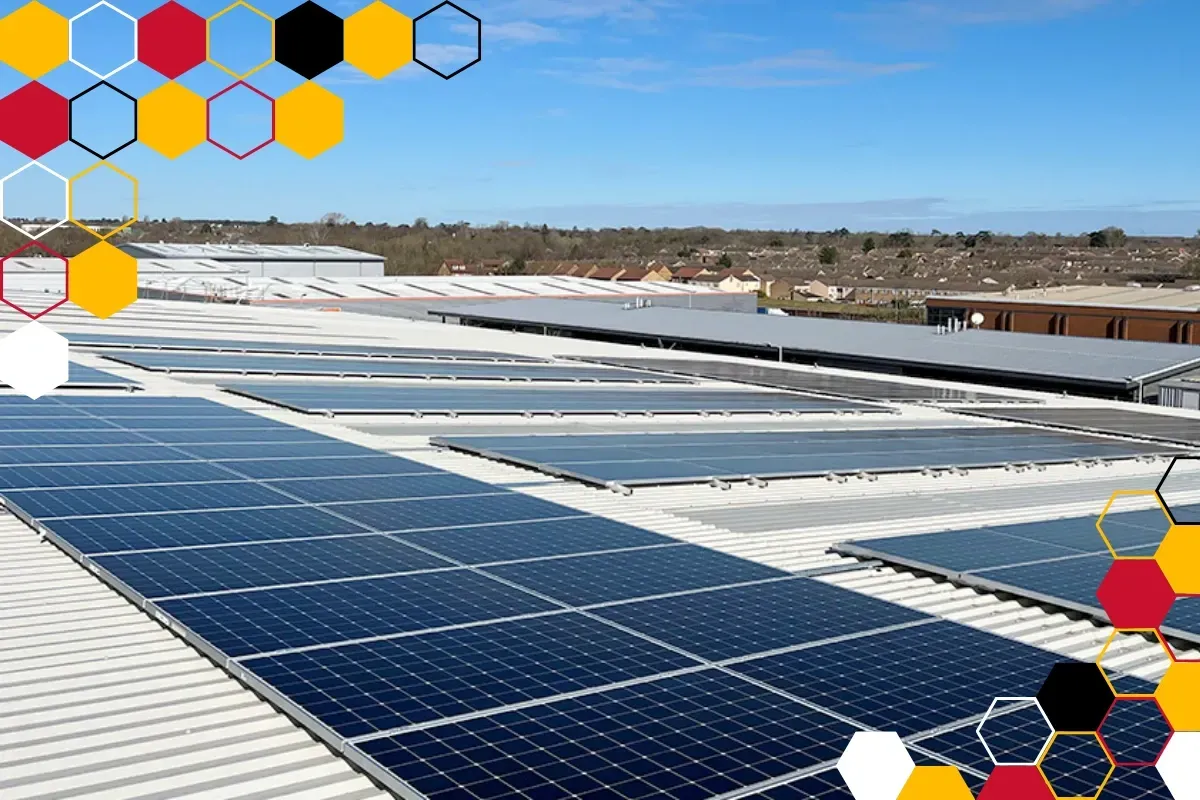
Is Solar Profitable for Warehouses? – Manchester
Ask most Manchester warehouse operators what their biggest headache is, and energy costs will be somewhere near the top of the list. Greater Manchester's logistics and industrial sector has grown considerably over the last decade, but so have electricity bills. For facilities running lights, heating, refrigeration, and heavy equipment across long shifts, the meter never really stops. The question isn't whether solar could help. It's why more warehouses haven't made the move already.
Quick Take: Warehouse solar is profitable, and the case in Manchester is strong. A well-sized rooftop system can cover 40–60% of a typical warehouse's electricity use, with payback achieved in 3–5 years and significantly lower running costs from that point on. This blog covers the financials, the practicalities, and the real challenges, so you have everything you need to decide whether it's the right investment for your site.
Table of Contents
Why Solar for Warehouses Makes Business Sense
Key Benefits of Installing Solar Panels on a Warehouse
How Much Roof Space Do Manchester Warehouses Need for Solar?
Energy Costs, Savings, and Return on Investment
Important Factors to Consider Before Installing Warehouse Solar
Common Challenges and How to Overcome Them
Why Solar for Warehouses Makes Business Sense
There's a reason warehouses keep coming up as the ideal solar candidate. They tend to have large, flat, largely unobstructed rooftops with very little competing for the space. They also draw the bulk of their electricity during daylight hours, which is precisely when solar panels are at their most productive. That natural match between when you're using power and when the panels are generating it is what makes the economics work so well.
Manchester has one of the UK's most active warehousing and logistics sectors, concentrated around areas like Trafford Park, Wythenshawe, Irlam, and the broader M60 corridor. These are energy-hungry operations. Electricity overheads sit near the top of most cost sheets, and solar gives businesses a direct way to take control of that line. You can learn more about how we work with commercial sites across the city to make that happen.
There's a wider commercial angle too. Businesses with credible sustainability credentials are increasingly favoured by customers, investors, and logistics partners. A solar installation on your Manchester warehouse isn't purely an energy decision. It signals where the business is heading. Get in touch to talk through what that looks like for your specific operation.
Key Benefits of Installing Solar Panels on a Warehouse
Lower Energy Bills
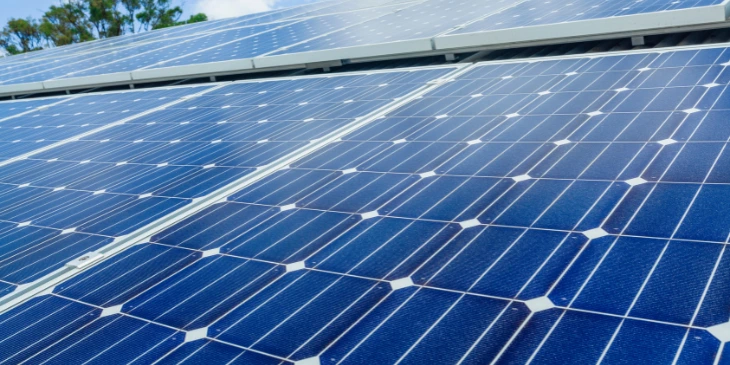
This is the headline benefit. A 100–130 kW solar system, roughly 280–330 panels covering around 930 m² of roof, can supply 40–60% of a typical warehouse's electricity. Industry analysis confirms that warehouses running large refrigeration and HVAC loads are among the biggest beneficiaries of rooftop solar, as on-site generation directly offsets the highest-cost grid consumption.
At current UK commercial rates of around 21–25p per kWh, a system of that size translates to roughly £16,000–£24,000 in annual savings. And unlike grid electricity, where prices have lurched upward in recent years, solar output costs next to nothing once the system is paid off. That's a genuine long-term hedge for any Manchester business that's felt the pain of energy price spikes.
Stable, Predictable Costs
Grid tariffs move with the market. Solar output doesn't. Fixing a low cost per kWh for 25 years or more gives your finance team something they'll value: certainty. For warehouse operators managing tight margins, that predictability matters.
Revenue from Surplus Generation
If your warehouse generates more solar electricity than it consumes, you can export the surplus to the grid under the Smart Export Guarantee (SEG). It won't transform your revenue, but it ensures no generation goes to waste and adds a modest income stream on top of your core bill savings.
A Stronger ESG Position
A 77 kW solar installation saves roughly 11 tonnes of CO₂ per year. For Manchester warehouses with sustainability reporting obligations or corporate clients who audit Scope 1–3 emissions, that's a meaningful contribution. Solar helps your numbers move in the right direction without requiring major operational change.
Making More of Your Roof
Most warehouse roofs do one thing: keep the weather out. Solar turns that same roof into a productive asset. UK industry estimates put the total solar potential of warehouse rooftops at 10–15 GW nationally, most of it currently untapped. Adding battery storage takes this further, letting you store surplus daytime generation for use in the evening or overnight, which suits warehouses with extended operating hours particularly well.
How Much Roof Space Do Manchester Warehouses Need for Solar?
Allow roughly 1 kW of solar capacity for every 7–10 m² of clear, usable roof space. That means a 1,000 m² warehouse roof can typically support a 100–140 kW system, around 280–350 panels, generating between 95,000 and 133,000 kWh per year under UK irradiance conditions. A qualified installer will size the system by matching capacity to your actual load profile rather than just maxing out the available area.
For Manchester warehouses with south-facing or near-south roofs, generation estimates will be at the upper end. Flat roofs, widespread across Greater Manchester's industrial estates from Trafford Park to Openshaw, work well with ballasted mounting systems. These angle the panels for better output without penetrating the roof membrane, protecting existing waterproofing warranties.
A nearby case study from a Warrington industrial site shows a 21 kW system generating over 40% of the site's yearly electricity needs. That kind of result is achievable across Greater Manchester's industrial stock. Our about page covers how we approach commercial assessments if you'd like to understand the process before committing to anything.
Energy Costs, Savings, and Return on Investment
UK commercial electricity currently runs at around 21–25p per kWh. Every 100,000 kWh your solar system produces saves you roughly £21,000–£25,000 in grid purchases. A 100 kW system generating around 100,000 kWh per year can cut your annual electricity bill by £20,000–£25,000.
UK businesses can also benefit from Enhanced Capital Allowances, allowing 100% tax relief on qualifying energy-saving plant and machinery in the year of purchase. Research on cold storage facilities confirms that solar combined with battery storage cuts overall energy expenses while helping businesses avoid expensive peak-rate charges. Our maintenance service is worth factoring into your planning to protect that investment long term.
Important Factors to Consider Before Installing Warehouse Solar
Your Energy Profile
Before sizing a system, you need a clear picture of when and how much electricity your warehouse consumes. Solar performs best when demand is concentrated in daylight hours, which is true for most warehousing and logistics operations. A good installer matches system capacity to your real load profile rather than simply filling every available square metre with panels.
Roof Condition and Structure
Modern steel-framed warehouse roofs built after 1990 can typically carry 15–25 kg/m² of solar panels without structural reinforcement. Older or lighter-built roofs need a survey first. Orientation matters too: south-facing roofs generate the most, but east and west-facing roofs still deliver strong returns. For warehouse sites across Greater Manchester, particularly in Trafford Park, Irlam, and Openshaw, roof age and construction can vary considerably. Guidance on rooftop installations makes clear that matching system capacity to actual electricity use matters as much as available roof space.
Permitting and Grid Connection
Most UK warehouse rooftops fall under permitted development rights, so planning permission isn't usually required. However, any system over 50 kW requires a G99 application to your Distribution Network Operator (DNO) for grid connection approval. That's a standard step, but it takes time. Factor it into your project timeline from the start.
Common Challenges and How to Overcome Them
Split Incentives for Tenanted Warehouses
If your Manchester warehouse is leased rather than owner-occupied, there's a well-known problem: the tenant pays the energy bills, but the landlord owns the roof. Green lease agreements and savings-sharing arrangements between landlord and tenant are increasingly common solutions, and it's a solvable situation.
Structural Limitations on Older Roofs
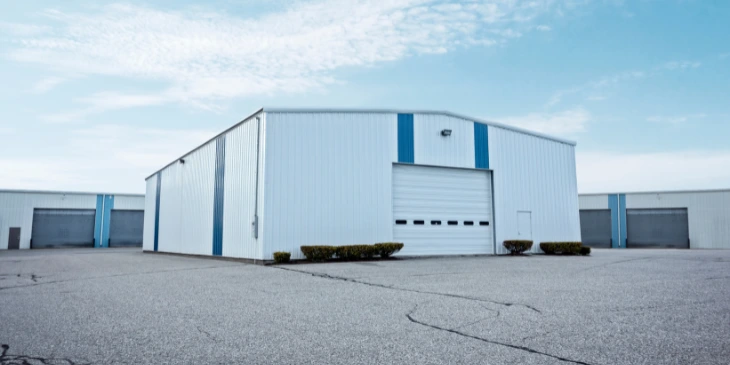
Not every warehouse roof can take the additional load. Structural reinforcement is one option. Ground-mounted solar or solar carports on adjacent land are another, and they work particularly well for sites with generous yard areas. Older industrial stock in areas like Collyhurst, Miles Platting, and Gorton is worth checking early.
Grid Connection Delays
DNO applications for larger systems can take months. The fix is early engagement: submit your G99 application as soon as the system design is confirmed. Businesses in north Manchester, east Manchester, and west Manchester should all build DNO timelines into their project planning.
Maintenance Concerns
Solar PV is genuinely low-maintenance. Panels are largely self-cleaning in UK rainfall, and in Manchester there's no shortage of that. They carry 25-year performance warranties as standard. An Operations and Maintenance (O&M) contract provides monitoring, scheduled inspections, and fast response if anything does go wrong. Our solar maintenance team covers this across Greater Manchester.
Final Thoughts on Solar for Manchester Warehouses
Large roof areas, high daytime electricity consumption, strong UK commercial energy rates, and a broad range of financing options make warehouse solar one of the most financially sound business decisions available right now. The payback periods are short, the savings are real, and the long-term picture is compelling.
This city led the way during the Industrial Revolution. Trafford Park was once the world's first industrial estate. There's no reason its rooftops can't now be among the city's most productive solar assets.
If you're operating a warehouse in south Manchester, city centre, or anywhere else across Greater Manchester, the starting point is a proper site assessment. Contact us to find out what your warehouse roof could realistically deliver, or browse our blog for more guides on commercial solar across the city.
Solar for Manchester Warehouses FAQs
Are warehouses suitable for solar panels?
Very much so. Large, flat, unobstructed rooftops make warehouses one of the most practical building types for solar. Most warehouse operations draw power during the day, which lines up well with when panels generate. A properly sized system can cover 40–60% of a warehouse's electricity use, and pairing it with battery storage pushes that figure higher.
How many panels will a Manchester warehouse need?
It depends on your roof size and electricity consumption. As a general guide, allow around 1 kW of capacity for every 7–10 m² of usable roof. A 930 m² roof typically accommodates 250–330 panels, roughly 100–130 kW. Your installer will size the system properly once they've reviewed your energy bills and assessed the site.
Do I need planning permission for warehouse solar in Manchester?
Usually not. Most commercial buildings fall under permitted development rights for rooftop solar in the UK. For systems over 50 kW, a G99 application to your DNO is required for grid connection approval. That's a standard process, not a planning barrier.
Should I add battery storage to a warehouse solar system?
Batteries aren't essential, but they make the economics considerably stronger for warehouses with evening or overnight loads. Storage means you can use 60–80% of your solar generation on-site rather than exporting surplus at lower rates. Whether the numbers stack up depends on your usage pattern. Our battery storage page covers the options in more detail.
