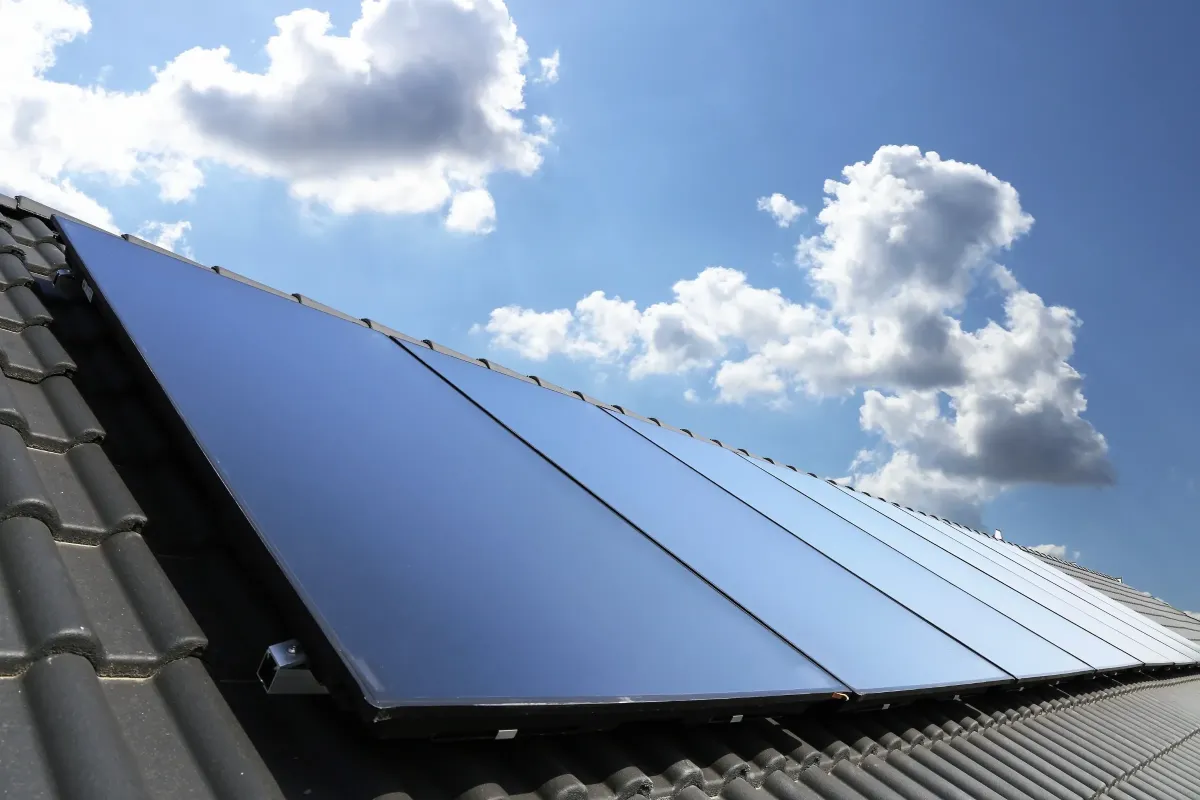
South Solar Panels Guide - Manchester 2026
Thinking about solar panels for your Manchester home or business? You've probably heard that a south-facing roof is the gold standard. But what does that really mean for your energy bills, and is it actually necessary? Here's the quick take: south-facing solar panels do generate the most electricity in the UK because they're positioned to capture sunlight throughout the day. However, if your roof faces east, west, or somewhere in between, don't panic. Modern solar technology and smart design can still deliver strong results and savings, even without that picture-perfect orientation.
In this guide, we'll walk you through why orientation matters, what south-facing actually means in Manchester's context, the benefits you can expect, and practical alternatives if your roof isn't pointing due south. We'll also cover local factors like Manchester's weather patterns and how to get the best return on your investment.
Table of Contents
Why Orientation (and Tilt) Matter
What "South-Facing" Means in the UK Context
Benefits of South-Facing Solar Panels
Alternatives if You Don't Have a South-Facing Roof
ROI and Savings: Why South-Facing Panels Pay Off
Why Orientation (and Tilt) Matter
Solar panels generate electricity by absorbing sunlight, so the direction they face and the angle they're tilted at make a real difference to how much power they produce. For the best year-round output in the UK, panels should face toward the equator (due south in our Northern Hemisphere) at a moderate tilt. This positioning keeps panels in sunlight longer each day, particularly around midday when the sun is highest, which means more electricity per panel and bigger savings on your bills.
Orientation is crucial. A panel pointed directly south will receive sunlight more continuously and head-on than one facing east (which only gets strong sun in the morning) or west (afternoon sun). South-facing systems almost always generate the most electricity, while east or west-facing roofs typically produce about 15% less energy, and north-facing roofs around 30% less.
Tilt angle matters too, though it's usually a bit less sensitive than direction. Panels produce the most power when sunlight hits them at a perpendicular angle. In Manchester (around 53.5°N), panels perform best with a tilt around 30-40°, which is conveniently the pitch of many UK roofs.

What "South-Facing" Means in the UK Context
In the UK, a south-facing roof is one that broadly faces toward the south compass point, soaking up sunshine through the day. Thanks to Britain's northern latitude, the sun is always to the south of us at midday, which is why south-facing gardens and windows get the most sun. For solar panels, a south-facing roof means maximum exposure and the greatest amount of energy generation overall.
How much more? Studies show that in Britain, an installation facing due south outperforms the same system on other orientations. South-east or south-west facing panels (only slightly off south) typically yield about 94% of the energy of a due-south array. Even an east or west-facing system can still produce roughly 80% of a south-facing system's output in the UK.
To put this in perspective with real numbers: a 4 kW system in the North West on a south-facing roof can generate roughly 3,600-3,700 kWh per year. That same system on a pure east or west-facing roof might produce around 2,880-2,960 kWh per year. So the south-facing orientation gives a few hundred extra kilowatt-hours annually, which is a notable bump in energy.
Benefits of South-Facing Solar Panels
Choosing a south-facing orientation for your solar panels comes with several clear benefits:
Maximum Energy Output: A south-facing array will generate more electricity over the course of the year than any other orientation. By keeping panels bathed in direct sun for longer, it boosts total energy production, which directly increases your savings on electric bills.
All-Day Sun Exposure: South-facing panels receive sunlight from sunrise to sunset without notable loss, particularly in the longer days of spring and summer. This broad exposure window means your system is producing power throughout the day, not just in a short window.
Higher Efficiency and Performance: With a south-facing setup, the sun's rays hit the panels at a more perpendicular angle for more hours of the day, which improves the panels' efficiency in converting light to electricity.
Better Winter Performance: In winter months, the sun is lower in the sky and daylight hours are shorter, which normally lowers solar output. However, a south-facing orientation mitigates winter losses by making sure panels are pointed toward the low midday sun as much as possible.
Optimised Return on Investment: The higher energy generation of south-facing solar panels means you get a faster return on your solar investment. You save more on electricity bills each year, which helps pay back the installation cost sooner.

Limitations
While south-facing solar panels have clear advantages, orientation isn't the only factor in solar performance. Here are some limitations and things to check:
Shading Issues: Even if your roof faces south, check for any shadows cast by nearby trees, chimneys, or other buildings, particularly during peak sun hours (roughly 10am-3pm). A shaded panel produces very little power. If some shading is unavoidable, there are solutions like trimming overhanging branches or using optimisers that allow each panel to work independently.
Roof Pitch and Angle: A 30-40° pitch is ideal in our region. If your roof is noticeably flatter or very steep, the panel output could be a bit lower at certain times of year. However, this isn't a show-stopper. Installers can mount panels on angled frames to achieve a better tilt if needed.
Roof Condition and Structure: Before installing solar, check the condition of your roof. Solar panels last 25+ years, so your roof should be able to last that long too. If your roof is old, leaky, or due for replacement, it's wise to address that first.
Available Roof Space: You'll typically need around 10-20 m² for a home solar array (roughly 6-12 panels for a 3-4 kW system). If your south-facing roof is small or crowded with obstructions, that limits how many panels can fit.
Alternatives if You Don't Have a South-Facing Roof
What if your roof doesn't face south? Don't worry – you can absolutely still go solar. Here are some alternatives and strategies:
East or West-Facing Roofs: Solar panels on an east or west roof can still deliver around 80-85% of the output of a south-facing system. That's strong performance. One neat advantage: east-west systems produce a broader power curve across the day, which might better match when your household uses electricity.
South-East or South-West Orientation: If your roof faces south-east or south-west, that's almost as good as due south. SE and SW orientations receive sunlight most of the day with only a minor reduction in total irradiance. SE or SW systems in the UK often generate about 90-95% of the energy of a due-south system.
Dual-Orientation Arrays: Some homes have multiple roof faces. You can split your solar panels between two orientations. This is common on semi-detached or detached houses where one roof slope faces east and the opposite faces west.
Flat Roofs (Tilting Frames): If you have a flat roof that doesn't "face" any particular direction, you can still have an optimal south-facing array by using tilted mounting frames. On flat roofs, panels are typically installed on racking that props them up at an angle and these can be oriented due south.
Optimised Technology: If your roof orientation is less than ideal, today's solar tech can help bridge the gap. High-efficiency panels generate more power per square metre, partly offsetting orientation losses. Additionally, if you pair your solar array with energy storage, you can capture excess energy whenever it's produced and use it later.
Local Factors in Manchester
Installing solar in Manchester isn't just about global best practices. Local conditions play a big role too:
Typical Roofs in Manchester: Manchester boasts a rich mix of housing types, from Victorian red-brick terraces in areas like Chorlton and Didsbury to modern developments in Salford Quays and post-war semis across suburbs like Sale and Altrincham. Most pitched roofs in Greater Manchester have slopes in the ballpark of 30-40°, which is great for solar.
Weather and Sunlight in Manchester: Manchester's climate is temperate maritime, which means we get our fair share of cloudy days and rain. The city receives around 1,400 hours of bright sunshine per year on average. Here's the thing though: solar panels generate electricity not just from direct sunshine but also from daylight. Even when it's overcast, your panels will produce power (albeit at a lower level).
Our Manchester customers are often pleasantly surprised to see their system still ticking along on a cloudy afternoon, generating maybe 10-30% of its maximum. Seasonally, Manchester has long daylight in summer (around 16.5 hours in June) and very short days in winter (only around 7.5 hours in December).
Shading in an Urban Environment: Manchester is a vibrant city with plenty of greenery and building density in parts, which means shading is a real consideration. In leafy suburbs like Didsbury or Chorlton, mature trees can cast long shadows over roofs at certain times. When we design solar systems in Manchester, we use tools to map the sun's path relative to your roof and identify any obstructions throughout the year.
ROI and Savings: Why South-Facing Panels Pay Off
One of the biggest questions homeowners have is how quickly solar will pay for itself, and this is exactly where south-facing panels shine. By producing the maximum energy, a south-facing solar array can deliver the highest savings and fastest return on investment compared to other orientations.
More Generation Equals More Savings: A south-facing system simply generates more kilowatt-hours of electricity per year, which directly translates into more money saved on your energy bills. For example, a typical 4 kW solar system in Manchester on a south-facing roof might produce around 3,600-3,700 kWh per year. At the current electricity price of around 28p per kWh, that equates to roughly £1,000+ in bill savings per year.
Faster Payback Period: The payback period is how long it takes for cumulative savings to equal the upfront cost. If your roof is south-facing and unshaded, you'll be on the faster end of that range – possibly even under 8 years if your usage is high and you self-consume a lot of the solar power.
Let's say a 4 kW system costs £6,000 (after the UK's 0% VAT). Using the above example, £1,000 per year savings would recoup that in around 6 years, whereas £800 per year would take 7.5 years. Over 25+ years of panel life, both are great investments, but the south-facing setup clearly starts returning net profit sooner.
Higher Energy Offset and Stability: South-facing panels not only save you money faster, they also offset a larger portion of your electricity usage, which can insulate you from energy price hikes. If your panels are oriented for maximum output, you're covering a bigger share of your consumption with free solar energy.
Final Thoughts on South-Facing Solar Panels
South-facing solar panels make a lot of sense, particularly here in Manchester. By aligning with the path of the sun, they generate the most energy, save you the most on your bills, and provide the quickest return on your green investment. That said, even if your roof isn't perfectly oriented, solar can still work wonders with the right design and technology.
Ready to take the next step toward clean, cost-saving energy? We're here to help. Solar Panels Manchester is your local expert in designing and installing solar systems optimised for Manchester's conditions. Our team will give you an honest assessment of your roof orientation, and if it's south-facing we'll help you make the most of it – if it's not, we'll craft an alternative that still delivers strong results.
Don't let another sunny day go to waste. Contact us today for a no-obligation quote or consultation about solar panels for your Manchester property. Join the solar swarm and be part of the growing community of Mancunians who are generating their own power and fuelling the city's bright future.
If you're interested in maximising your solar investment, you might also want to explore our solar maintenance and repair services to keep your system running at peak performance. And if you're in areas like City Centre, North Manchester, South Manchester, East Manchester, or West Manchester, we've got you covered across the entire city.
Ready to get started? Go solar today by reaching out to Solar Panels Manchester – your trusted local solar partner. Let's power Manchester's future together!
South Facing Solar Panels FAQs
Do I need a south-facing roof for solar panels to work effectively?
No – a south-facing roof is ideal but not strictly required. While a south orientation will give the highest energy yield, today's solar technology is quite forgiving. Even roofs facing east or west can still generate 85-95% of the energy that a south-facing system would produce.
How much less energy will solar panels generate if my roof faces east or west instead of south?
An east or west-facing solar array will produce around 15-20% less energy compared to the same system on a south-facing roof. In practical terms, if a south roof system gave 100% of a certain output, an east or west roof might give roughly 80-85% of that output.
Can I install solar panels on a north-facing roof in the UK?
You can, but it's generally not recommended unless there are no other options. North-facing panels might only produce around 50-60% of the energy that the same panels would on a south-facing roof. For most homeowners, if north is the only option, it might be better to explore ground-mounted panels in the garden.
What is the best angle for solar panels in Manchester?
The optimal tilt angle for solar panels in Manchester is around 30° to 40° from horizontal. Most pitched roofs in Manchester happen to fall in this sweet spot anyway.
What can I do if my roof isn't south-facing but I still want solar?
You have several options: use east-west roof faces, add more panels if space allows, use tilt frames on flat roofs, consider ground-mounted solar, optimise technology with microinverters or power optimisers, or pair your solar with a battery to store excess energy.
